Into the Wild
Into the wild with the ANEW micro-grid composite.
Wind, water, solar, storage and distribution, engineered as one system. Designed for the places the grid never reached — and built to stay on when it fails.
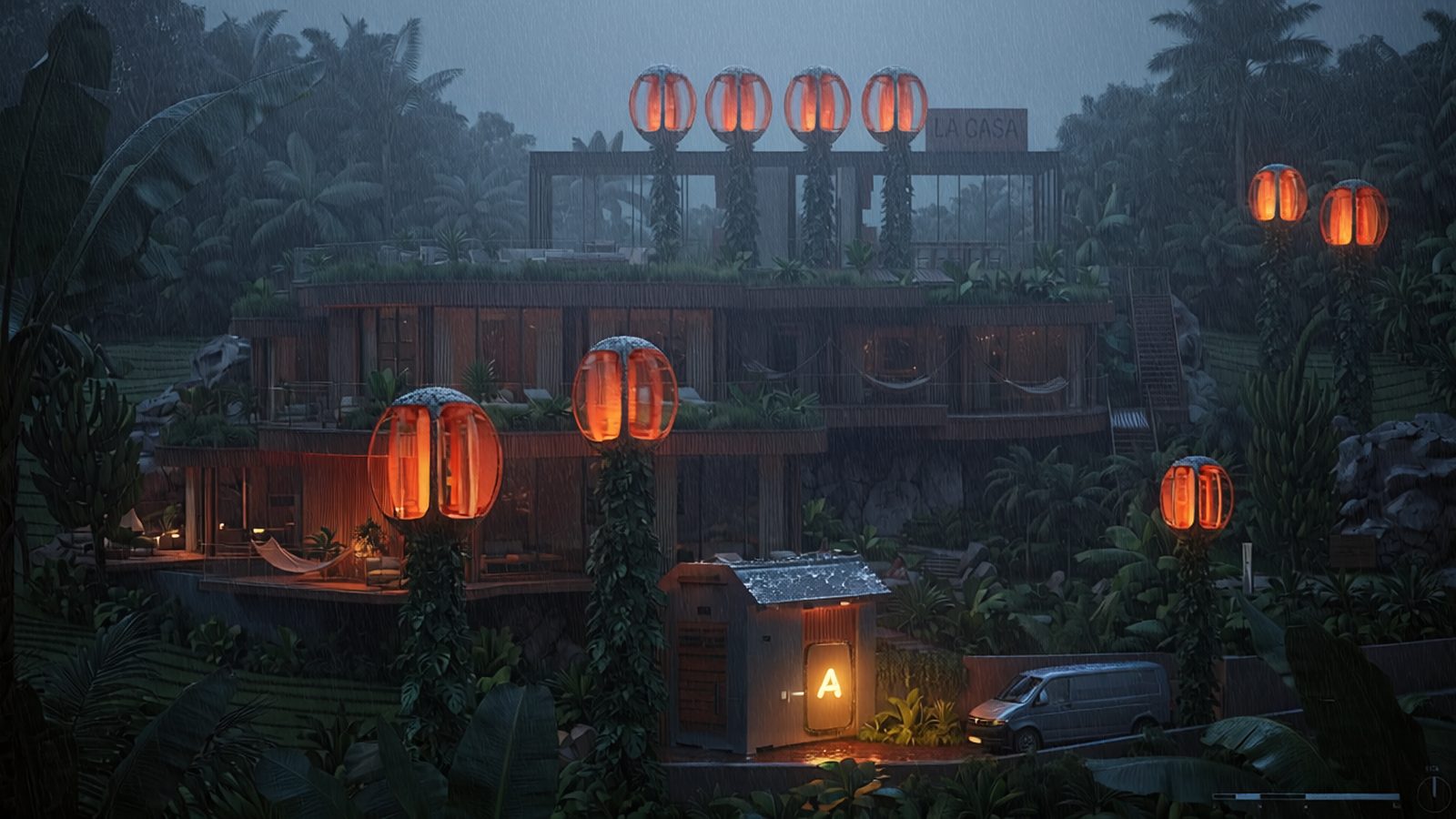
ANEW reference design — architectural rendering generated with Runway.
The problem with remote power
Off the grid, the default answer is a diesel generator: fuel you have to truck in, a service schedule, noise, fumes, and a single point of failure. The alternative — one renewable source bolted on alone — trades a fuel problem for an intermittency problem. Solar stops at dusk. Wind drops. A dry season starves a turbine.
A composite, not a product
A micro-grid solves it by refusing to depend on any single source. Generation, storage, conditioning, distribution and metering are specified together, so the weaknesses cancel out instead of stacking up.
Generation
Solar by day, wind through the evening, micro-hydro hardest in the weather that shuts panels down. Different sources, different hours.
Storage
The battery bank absorbs midday surplus and discharges after dark — the buffer that turns a generation curve into a flat line.
Distribution
Conditioning and a sealed distribution point put every source onto one clean bus, so switching between them never shows up as a flicker.
Long-duration reserve
When rain settles in for days, on-demand hydrogen carries the site past what batteries hold — before the grid is needed at all.
Why it stays on 24/7
Islanded, the composite covers itself: each source fills the hours the others can't, storage bridges the gaps, and the reserve covers a bad week. Where a grid connection exists, it sits behind all of it as backup rather than dependency — and exports the surplus instead of wasting it. That export is also what makes the economics work: metered generation is what carbon credits, a PPA and tax credits are written against.
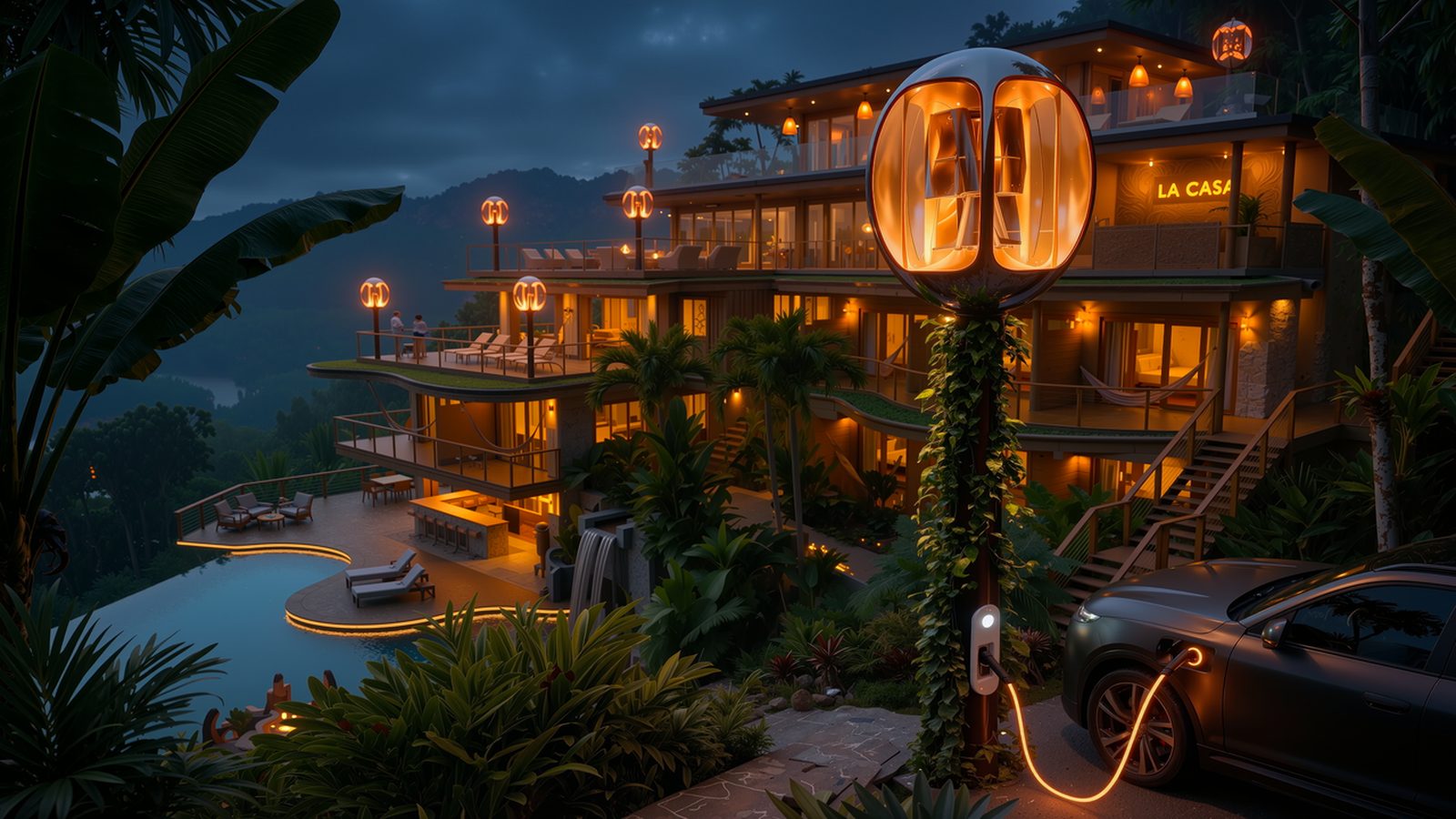
ANEW reference design — architectural rendering generated with Runway.
Where it belongs
Hotels and lodges past the last pole. Farms and processing sheds. Clinics that cannot lose a cold chain. Communities waiting on a line that may never arrive. Anywhere the cost of an outage is measured in something other than money.
Bring it to your site.
Start with an audit of your own site — sun, wind, water and load — and see what the system sizes to.