ABOUT ANEW ENERGY
Decades of doing, not just talking.
ANEW Energy Corp was established in 2017, carrying forward several decades of research and development — to fight climate change with technology people can actually afford, and to prove that purpose and commercial success are not in conflict.
Video transcript
Okay, so you're on the About Us page. So let's talk a little bit about who we are, how we got here and why we're doing all this. So New Energy, is a group of manufacturing professionals from across the globe. So we have aerospace engineers, we have automotive manufacturers, we have medical, we have scientists, we have semiconductors manufacturing, people. And a lot of them are my age, we're older tradesmen, that have wrenched on all these complex machines and we've built these systems that are used to bring a solar panel into production. We have solar panel people, and so we all know each other. We go back many decades.
I'm the ringleader that put this whole band of climate activists together and we really sat down and dissected the market and looked at where the gap was. Why would this platform not be successful. And so we found a couple things. The design criteria is most people aren't electrical engineers and you know, calculating all the electrical loads and all that is a challenge and you've got to pay somebody to do that.
So we did it all in the electronics, the intelligence and all of the devices that you're about to learn about and we just plug it together and it doesn't really care whether it's a big industrial application, a home application, a school, a hotel, you just plug these devices in and regardless of the wind speed or the solar power, it syncs with the load and trickles in power and manages it all. We do the same thing when we talk to the grid where most homes and businesses are connected. And so we we can send excess power back to the grid and sell it to the grid or we can take it in.
So these engineers, you know, we've dissected, you know, where are the gaps and how can this fail? And we are not prepared to fail. So at Intel, many of us vendors would go in and they would say, say the two mantras and, and the mantra was we're not planning to fail so we better start planning because today we're not going to fail. And the other one was the human error will come in and wreck the process. Your job as a vendor to Intel is to human proof everything. So we have human proofed everything and we want to be able to kind of tell you about why we design these things the way they are.
It took us several decades to get here, so that's where we've poured all of our capital in and now we're ready to raise capital to build these factories. We believe to do this at scale, to create thousands of jobs that we need to build a factory, debug it, copy every manufacturing process and document it and then deploy it around the world. So we call this the copy factory. And this is kind of the heartbeat of everything.
And so anyhow, this is where we're going. We're all about Earth abundant materials. So the aluminum and the ferrite magnets are Earth abundant. Copper is not earth abundant, and neodymium magnets are not Earth abundant. So we're trying to harvest raw materials that have a low carbon footprint, less carbon energy used to mine it and make that transition over. So we're all about Earth abundant materials.
So we're from the U.S. We're struggling with our administration right now. We've had a lot of big deals that came and went, through the administration. So we believe launching this in a climate, energy, renewable energy friendly country like Costa Rica is a great place to start and then we can copy this around and hopefully my country gets its act together with climate and we get back there and start dropping some of these products, and factories in there.
So we are here, we're in it for the long haul and we're here to support everything, hold us accountable. We've got strong big shoulders to be able to carry the load. And we're here to listen to you, as the customer. We get lots of great feedback from you. So anyhow, that's a little bit about what we're doing. Thank you very much and on to the next video.
Overview
There is ANEW high-impact way forward.
Our strategy is simple to say and hard to do: build a highly automated factory that can be copied around the world, and make solutions affordable enough that everyone can participate in solving the climate crisis.
Every product we design targets a 50-year service life — spanning hydrogen, wind, water, solar, storage and distribution, with the services, training and IoT software to match. Along the way we create thousands of sustainable jobs, upstream and downstream.
Commercialization moves in three phases: Phase I proves the product design, Phase II brings light-volume production that meets every regulatory requirement, and Phase III scales through copy factories worldwide.
Phase I — Prove It
Products engineered for a targeted 50-year service life.
Phase II — Produce It
Light-volume production meeting UL, CE and every regulatory requirement.
Phase III — Copy It
Replicable factories deployed around the world — 10 copy factories by decade's end.
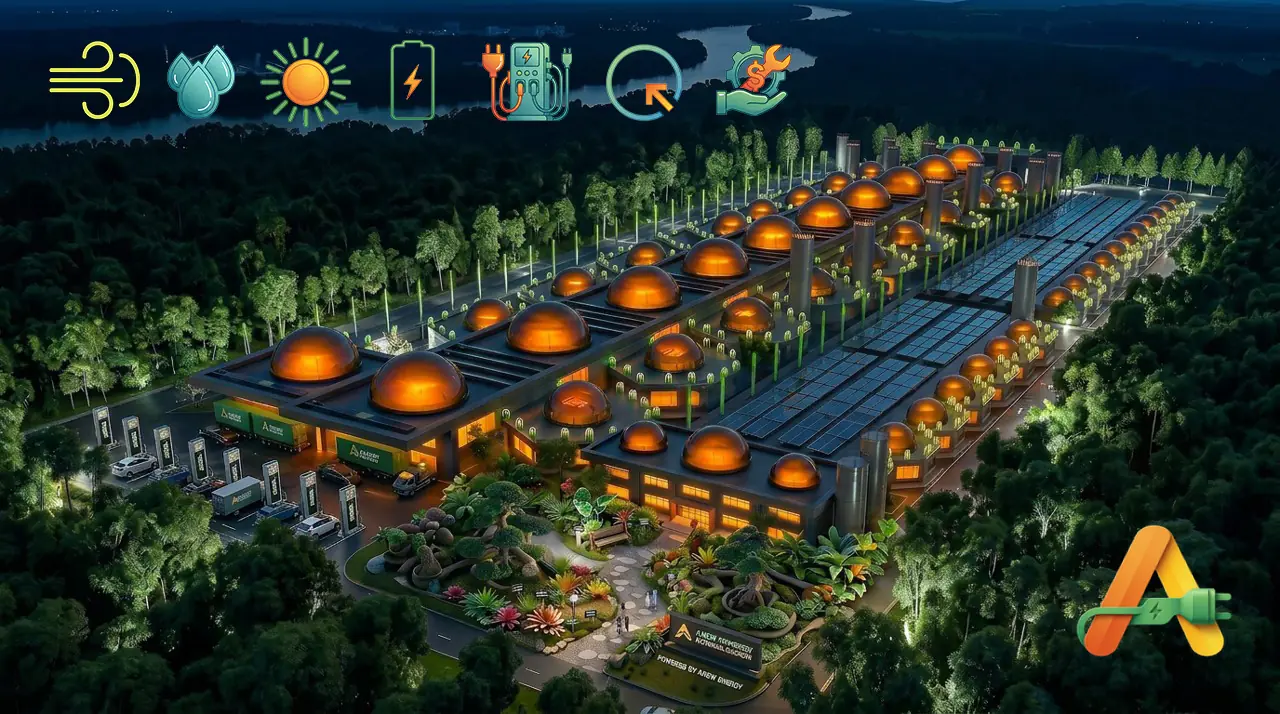
The Copy Factory
Highly automated, replicable and built to live in harmony with its surroundings — solar roofing, EV charging, on-site storage and thousands of local jobs.

Where We Work
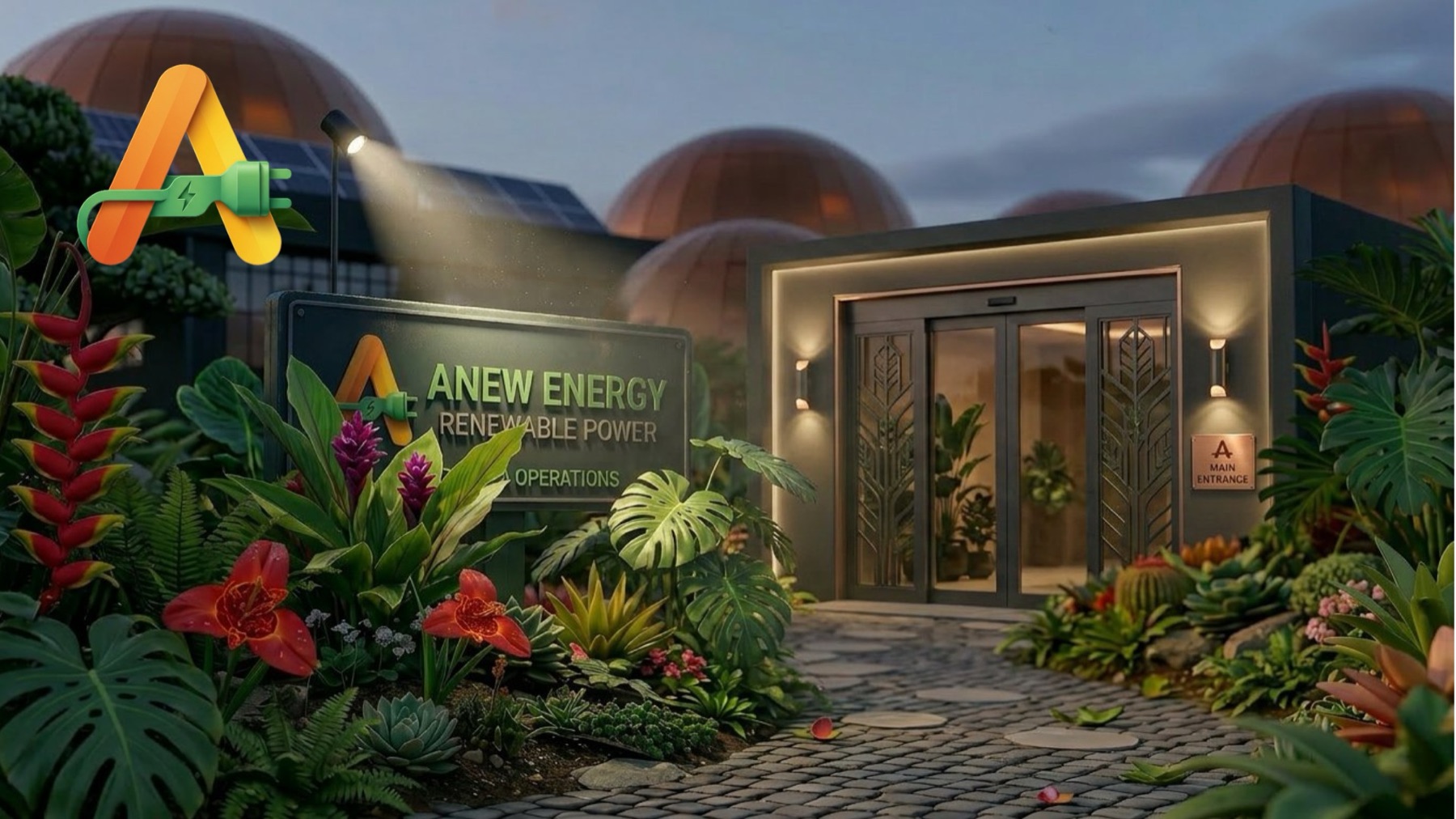
Operations, grown into the landscape.

Sustainability by Design
We build with earth-abundant materials.
We switched materials in order to consume less carbon — across manufacturing, transportation and installation.
A kilo of aluminum takes 3× more energy to produce than a kilo of stainless steel. Lightweight stainless structures also eliminate toxic coatings entirely.
Substituting copper conductors with electrical-grade aluminum cuts cost and embodied energy while maintaining conductivity where it matters.
One country controlled 58% of rare-earth mining and 92% of magnet manufacturing in 2020. Ferrite magnets free our supply chain from that vulnerability.


Global Presence
Rooted in the Rockies. Reaching the world.
Headquartered in Glenwood Springs, Colorado — in the neighborhood of the Rocky Mountain Institute and the Aspen Institute.
Why earth-abundant, really
You cannot build a transition on a single mine.
The case for earth-abundant materials is usually made on ethics. The harder case is geography.
Supply chains have pinch points nobody mapped. One corner of North Carolina yields nearly all the ultra-pure quartz behind the world’s silicon chips — a fact that stopped being theoretical when a hurricane flooded it. Britain entered the First World War importing most of its optical glass from the country it was fighting. The encouraging half: it rebuilt that industry in a few years. Capability can come back, but only if you notice it has gone.
And the ore keeps thinning. Copper has not run out; we mine steadily poorer rock at ever greater scale, with the energy, water and waste per usable tonne climbing to match. So we designed around it — earth-abundant, rare-earth-free chemistry, a design target of 85% recyclability by weight, and a life long enough that the material is not re-mined every decade. A fifty-year product cannot rest on one mine, one refiner or one country.
Recyclability is a design target — 85% of the finished product by weight, assessed against materials that have established recycling routes. Products are pre-production; achieved recovery depends on the recycling infrastructure available locally. How we state this figure
The paradigm we build on
A company built the way living things are built.
Earth-abundant materials, factories placed near the communities they serve, a 50-year horizon — all of it follows from one assumption: an economy is a living system, not a machine.
The assumption decides everything downstream. Mainstream economics was built on nineteenth-century mechanical foundations and never revisited them. A machine is assembled from interchangeable parts and optimised part by part; a living thing is not. For a manufacturer that decides whether you design to be replaced or repaired, whether you build one huge plant or many small ones, and whether the community around a factory is an input to it or a participant in it.
Restoration comes before regeneration. Healing what is damaged is not the same as regenerating, but nothing regenerates without it. For an energy company the honest first job is displacing what is burning today, in the places where the alternatives have never been affordable. That is the work ANEW was founded to do.
Several of the economic ideas in these sections come from The Great Simplification — Nate Hagens in conversation with John Fullerton on regenerative economics and Ed Conway on Material World. Cited as influences on ANEW’s thinking; none is affiliated with ANEW Energy and no endorsement is implied.
FAQ
Questions, answered.
Is ANEW Energy an impact-first company?
Yes. ANEW operates mission before margin, measuring success in carbon avoided, jobs created and communities powered.
Who founded and leads ANEW Energy?
ANEW was founded in 2017 and is led by Pat Conarro, Chairman, Co-CEO and CTO, who previously sold MicroTool to Brooks Automation (NASDAQ: BRKS), together with Ray Rohrbach, Co-CEO and Founder.
What is a copy factory?
A highly automated, fully replicable factory designed to be duplicated worldwide, powered by its own renewable micro-grid, creating local jobs upstream and downstream.
Where does ANEW manufacture?
ANEW is incorporated in the United States, with manufacturing planned in the United States and Costa Rica.
Meet the people behind the mission.
Five decades of manufacturing, engineering and business-building experience — on every continent.
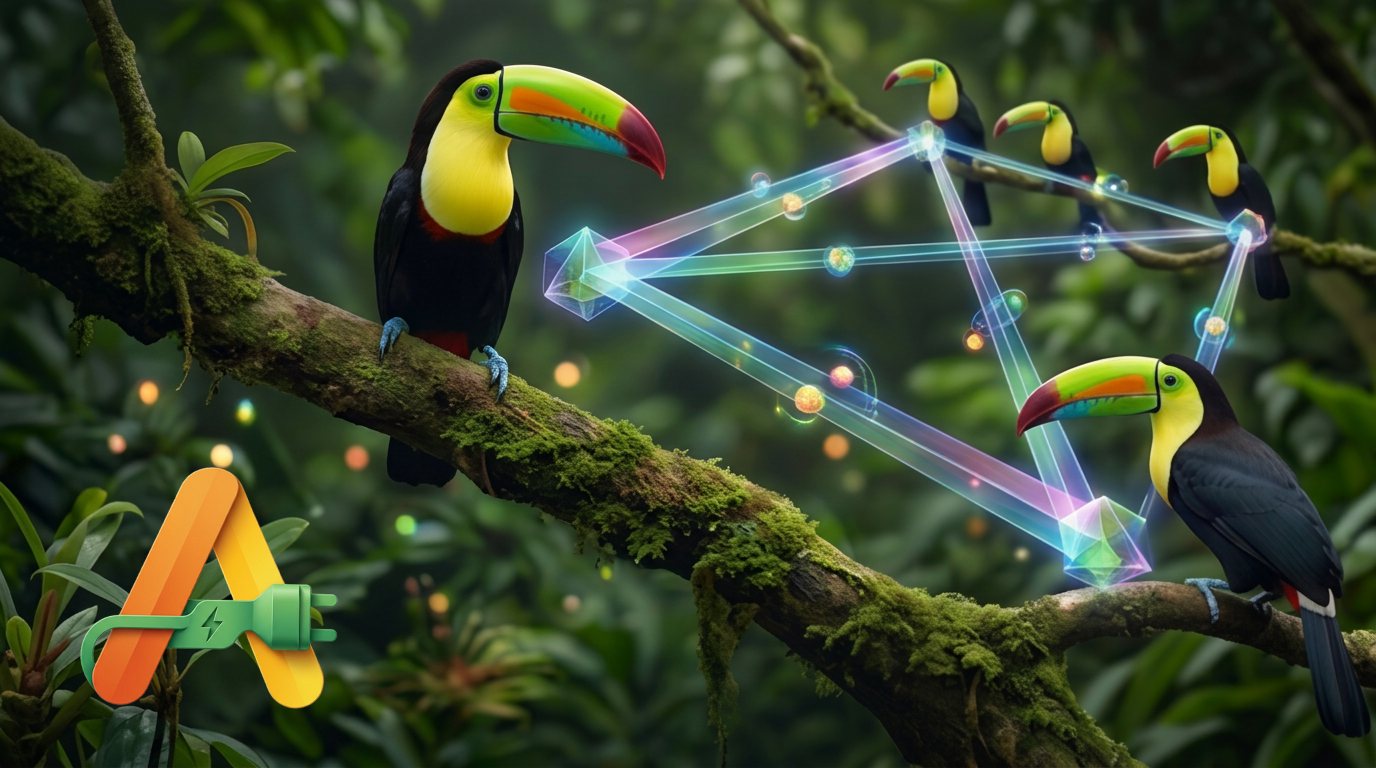
What we build is never a standalone box. Generation, storage and distribution are engineered to work as one micro-grid that runs islanded and grid-connects when it can — so the power stays on 24/7.
ANEW brand image — generated with Adobe Firefly.