THE MGRID · FIELD RESEARCH
Many small batteries, linked together, outlast one big one.
Twelve papers from our master distributor in Australia, on three continents, reach the same conclusion. A community whose homes share power through a mesh needs far less battery than one that runs from a central container. If those batteries survive the heat, the community stops paying for replacements every decade.

The statistics of sharing
Neighbours don’t all cook at the same minute.
A central container has to be sized for everyone at once, plus the power lost on the long cables to reach them. In a mesh, every home has its own solar and a small battery, joined to its neighbours by short 48-volt DC links. When one home spikes, the house next door covers it. Engineers call this the diversity factor: the sum of every home’s peak divided by the community’s actual peak.

Nature’s micro-grid · Spider monkeySpider monkeys live in a fission–fusion society. The troop splits into small groups to forage by day and comes back together at night. A mesh works the same way: each home runs on its own, and they join up whenever sharing helps.
Try it: add homes and watch the peak flatten
Simulated evening-heavy households (cooking, cooling, a kettle or pump). Each home still peaks at 3–5 kW, but the community’s peak per home falls as more homes join.
Illustrative load profiles generated in your browser. Charlie’s paper puts typical residential diversity at 1.2–1.5 for about 10 homes and 1.8–3.0 or more for 50–500 homes.
Battery each home needs
Remote Australian community, 25 kWh per home per day, one day of storage. For 50 homes that is about 1,625 kWh in a container against 812 kWh in a mesh.
Source: C. van Dongen, Comprehensive Mesh-Grid Battery Storage Systems, drawing on Okra Solar’s Nigerian pilot (337 Wh per connection in the mesh against 650–720 Wh for a centralised mini-grid).
Two ways to wire a village
Long cables to one container, or short links between neighbours.
| Linked mesh | Central container | |
|---|---|---|
| Total battery | 40–55% lower | Sized for everyone plus losses |
| Losses in distribution | Under 5% on short DC links | 5–20% on long AC runs |
| Cabling | 90–95% lighter | Poles and heavy cable |
| If one part fails | A few homes affected; neighbours cover | The whole community goes dark |
| Growth | Start with two homes, add as you go | Designed and paid for up front |
| Uptime reported | Over 99% in deployments | Typically 95–98% |
Source: C. van Dongen, Comprehensive Mesh-Grid Battery Storage Systems. Figures are his estimates from published deployments; site-specific load-flow modelling is recommended for every project.

Nature’s micro-grid · JaguarJaguars live alone, each across its own wide territory, so no single event takes them all. Charlie makes the same point about resilience: a central container is one target for a storm, a fault or sabotage, while a mesh loses only the homes nearest the damage.
Climate decides the bill
Heat is what wears batteries out.
Most home batteries today use lithium iron phosphate (LFP). It is safe and good value, but it fades faster the hotter it runs, and most are installed outdoors. Charlie estimated how much capacity 21 batteries sold in Australia would keep after 15 years outdoors in each climate zone. Lithium titanate (LTO) barely changed from one zone to the next.

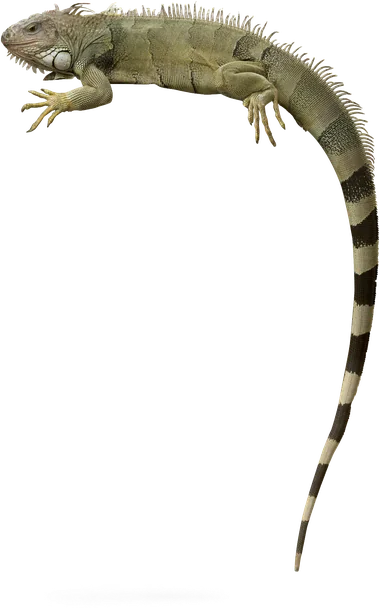
Nature’s micro-grid · Green iguanaA cold-blooded iguana runs at whatever temperature its surroundings give it, so it basks to warm up and moves into shade to cool down. Most batteries sit outside with no shade to move to, and heat is what ages them.
Capacity left after 15 years outdoors
One dot per battery model. Most owners replace a battery at about 70%. Hover over a dot for its figure.
Source: C. van Dongen, Updated Solar Battery Comparison Report (Australia, March 2026, no rebates). Cold: Tasmania, Blue Mountains. Temperate: Sydney, Melbourne. Hot: Darwin, Perth. Competing products are shown by chemistry and origin, not brand.
The cycle test behind the claim
Two 40 Ah LTO cells, fully charged and emptied at a fast 2C rate, 100% depth of discharge, room temperature.
LTO line redrawn from the cell manufacturer’s test chart supplied by Charlie (Cycle life diagram of 40Ah LTO cell). LFP lines are straight lines to typical warranty end-points, not test data.
What LTO trades for that life
From Zenaji’s own comparison sheet, stated plainly in both directions.
- 22,000 warranted cycles, 98% depth of discharge, 97.5% round-trip efficiency.
- Operates from –40 °C to 60 °C with no active cooling; can be recovered after being fully drained.
- No thermal runaway in abuse tests (puncture, short circuit, overheating), reaching a maximum of 80 °C.
- The trade-off: it is heavier. Lower energy density than lithium-ion. That matters for phones and cars, not for a battery bolted to a wall.
- And it costs more up front: about A$1,550 per usable kWh against A$650–910 for LFP in 2026.
Source: Zenaji Pty Ltd, Battery Storage Comparison V1.5 (2023); prices from C. van Dongen, June 2026.

Nature’s micro-grid · Strawberry poison-dart frogIts bright colours warn predators before anything goes wrong. Safety works best when it is built in from the start, not added later.
Cheap today, expensive later
The price tag is not the cost.
Divide what a battery costs over its life, including recycling and the call-out to swap it, by the energy it actually delivers, and the ranking changes. Charlie ran the numbers for 21 batteries. His second point matters for policy: rebates reduce the price of the first battery, but not of the replacements.

Nature’s micro-grid · Three-toed slothThe sloth gets by on a low-energy diet of leaves because it spends energy very slowly. A battery that wears slowly works the same way, and its cost per kilowatt-hour falls every year it keeps working.
Lifetime cost per kWh delivered, 21 batteries
Hot climate zone, hardware only, no rebates, one cycle a day over each battery’s warranted life. Hover over a dot for its specifications.
Method (Charlie’s): lifetime kWh = usable capacity × cycles × depth of discharge × efficiency × average retention. Cost = hardware + recycling at A$10/kg + decommissioning. Source: Updated Solar Battery Comparison Report, March 2026.
The rebate’s false economy
What a household pays up front after the mid-2026 rebate (about A$500 per kWh), against its 20-year total in a hot climate.
Budget LFP likely replaced in years 12–15, Australian-made LFP in years 16–18, LTO not at all. Source: C. van Dongen, Updated 7/10/20/30-Year True LCOS Analysis, June 2026.
Canberra: even in the cold
Effective cost of power per kWh, cool temperate climate, including capital, losses, fade, replacement and end of life.
For under 15–18 years of ownership, budget LFP still makes financial sense in cool climates. Charlie says so too. Source: True Lifetime Cost Comparison, Canberra & cooler Australian climates, 2026.

Six places, one pattern
From a Melbourne suburb to a Nigerian city.
Charlie costed the same idea in very different places. One is a working home. The others are designs with full costings, ready for a pilot. Each is labelled for what it is.
A home that has run off its own roof for four and a half years
73 panels (27 kW) in an east–west layout with an optimiser on each panel to work around tree shade, ten LTO batteries (19.3 kWh), a 7.5 kW inverter with an 18 kW surge rating, double insulation, heat pumps, induction cooking and an EV charger. Even at feed-in tariffs of 0–3 cents, the retailer pays the household back.
Source: Zenaji, Melbourne’s Most Solar-Powered Home. Figures are the homeowner’s and Zenaji’s; private tours can be arranged through Zenaji.

Nature’s micro-grid · Resplendent quetzalThe quetzal lives in cool, misty cloud forest, high in the mountains. Melbourne’s cold winters and hot summers test a battery in both directions.
A 50-villa retirement village
About 11 kWh a day per villa, 550 kWh for the village. Every option is sized for the mesh on equal terms. LTO uses 3 × 2.2 kWh per villa at community pricing. The gap in upfront cost narrows, and after year 15 the ranking reverses.
Battery-only cost per kWh stored. LFP assumes one replacement at 12–15 years in Sydney/Brisbane heat. Source: Retirement Village Mesh Battery Comparison, 2026.

Nature’s micro-grid · Scarlet macawPairs stay together for years. A body corporate plans on a 20–30-year horizon too, and it matters that nobody has to rewire elderly residents’ homes halfway through.
The tropics, where cheap batteries fade fastest
A 10 kWh budget LFP system costs A$7,500–8,900 after the rebate. LTO costs A$19,500–21,500. In sustained heat the LFP battery usually needs replacing within 10–14 years, and often again by year 20–25. Over 40 years, one LTO system delivers nearly twice the energy.
Source: Zenaji LTO vs budget LFP: the real cost of batteries in hot climates, 2026.

Nature’s micro-grid · Red-eyed tree frogIt thrives in heat and humidity that would ruin most electronics. Tropical sites need equipment built for those conditions from the start.
A hybrid mesh: shared DC, clustered AC, nothing to replace
Every home has its own ventilated rooftop solar, an MPPT charger and a night-only LTO battery on a shared 48 V DC bus. Every four homes share one heavy iron-core inverter (7.5 kW continuous, 18 kW surge), which slows lightning surges far better than lightweight electronics. Clusters link to each other through DC cables with two-way breakers. If one inverter fails, four homes are affected and the DC mesh still carries their power.
Container LFP replaced every ~9 years in 27–42 °C heat, with recycling at US$50/kWh and decommissioning at US$80/kWh each time. Source: C. van Dongen, Comprehensive Master Document for Nigerian Solar Micro-Grids, March–April 2026.
Nature’s micro-grid · JaguarNo single territory holds every jaguar. In this design no single inverter powers everyone, and the DC web keeps working around any one failure.
Night-only batteries, a shared DC bus and a cooler roof
Each home gets 1.5–2.0 kW of ventilated rooftop solar, one 2.2 kWh LTO battery sized only for the night, and a 5 kW hybrid inverter. An optional shared 40 A, 48 V DC bus adds 18–25% effective capacity. Power is valued at 15 PHP per kWh, a blend of grid power and the generators people run through outages.
The cheap home kits win on day-one price, and the paper says so plainly. Source: C. van Dongen, Philippines Village Mesh-Power Micro-Grid Solution, March 2026.

Nature’s micro-grid · HummingbirdOn cold nights a hummingbird can drop into torpor, slowing its body down to make its reserves last until dawn. A night-only battery works the same way: sized to reach morning and no bigger.
A benefit the container can’t give
Lift the panels, cool the house.
A central solar farm sits on the ground. Rooftop panels mounted 150–200 mm above the roof shade the house and open a chimney channel that draws hot air up and away. Charlie counts this as a cooling benefit that only a distributed system provides.
Source: C. van Dongen, Nigerian and Philippine micro-grid reports, 2026. Panels lose about 0.4% efficiency for every °C above 25 °C.

Nature’s micro-grid · ToucanA toucan’s huge bill works as a radiator. Research on toucans has shown it can shed a large share of the bird’s body heat by sending blood to the bill. The raised roof does the same job for a house, carrying heat up and away.

Micro-grid simulator
Design your community’s grid and watch it run.
Choose a community and a climate. The simulator sizes a central container and a mesh, runs a day in the village, and totals each battery over the years you plan to own it, including every replacement, recycling fee and call-out.

Nature’s micro-grid · White-faced capuchinCapuchins live in close-knit troops, and one monkey’s alarm call protects them all. In the village below, watch the gold lines as one home’s battery covers a neighbour’s.
Costs and assumptions
| Battery | Size | Up front | Replacements | Total cost | Per kWh | To recycle |
|---|
What each choice costs, year by year
How it works. Night energy per home = daily use × night share (or a full day). A central container is sized for every home plus 15% lost on distribution and conversion. The mesh saving is calibrated to Charlie’s worked examples: about 20% at 10 homes, 50% at 50 and 55% at 500. Each battery fades at the rate implied by Charlie’s 15-year outdoor retention for the chosen climate, and is replaced when it reaches 70% or runs out of warranted cycles (one cycle a day). The tropical zone fades a little faster than hot, following Charlie’s Philippine report (LFP under 75% within 7–9 years). Prices are 2026 Australian hardware prices per usable kWh: LTO A$1,550, Australian-made LFP A$910, imported LFP A$650. Each replacement adds recycling and a call-out, and the last battery is charged for the share of its life used. “Per kWh stored” divides the total by the night energy the batteries deliver. It covers storage only, not solar panels, inverters or installation. Falling battery prices would narrow the gap; set a negative price change to test that. Illustrative only. It is not a quote, a design or an offer, and real projects need site-specific modelling.
An idea from 2017
Charge your car from your own roof, anywhere.
Slow charging beats fast charging for the grid. Charlie’s arithmetic: the average car travels about 45 km a day, which takes about 8 kWh. Spread over eight hours parked, that is a load of about 1 kW, which today’s wires can easily carry. Ten cars fast-charging at once from one station is a very different load.
So most cars will charge where they are parked, at home, at work or at the kerb, and the grid needs a way to credit the energy a home’s solar makes to the car charging across town.
What that needs is metering and accounting. Every charge point has to know who is charging, measure the energy and settle it against the owner’s own solar or the cleanest, cheapest source available, network charges included. That is the job ANEW’s communications board is being designed for: measuring each kilowatt-hour at the source and signing it. Power Pole EV charging →

Nature’s micro-grid · Toucan in flightToucans cross the forest in short hops from tree to tree, the way an EV tops up wherever it happens to be parked.
Source: C. van Dongen, NRG Link: possible features and benefits, 2017, an early concept paper. Market figures in the original are forecasts from that time and are not repeated here.
How to read this research
Our partner’s work, with its interests on the table.
Who wrote it
Charlie van Dongen is Director and CTO of Zenaji Pty Ltd, which designs and makes the Aeon LTO battery these studies favour. Zenaji is also ANEW’s master distributor for Australia and the South Pacific. Read this as an expert manufacturer’s analysis, not an independent test.
What is measured and what is modelled
The Melbourne home and the LTO cell test are measured. The 15-year retention figures, the costs over 7–40 years and the village costings are Charlie’s models from 2026 market prices and his stated assumptions. They are shown with each chart.
How we present other brands
Charlie’s reports name 21 products. We show them by chemistry and origin (imported LFP, Australian-made LFP, NMC) rather than by brand. Only Zenaji is named, because it is the author’s own product.
Where ANEW fits
ANEW builds the rest of a micro-grid: generation, distribution, and the communications board that measures and signs every kilowatt-hour a node shares, so that a mesh can be financed. ANEW’s own Power Pack is a separate solid-state storage platform. Nothing here describes its chemistry.
Still to prove
◐ The mesh saving on a real ANEW site, with measured loads. ○ Long-term fleet data from LTO batteries in tropical villages. ○ A funded pilot in Nigeria or the Philippines. We will add results here as they come in.
What would change the answer
Cheaper future batteries, short ownership periods and cool climates all favour LFP, and the reports say so. The simulator lets you test each of these.
The research library
Twelve papers by Charlie van Dongen.
Cite as: van Dongen, C. (2017–2026). Micro-grid and battery storage studies. Zenaji Pty Ltd, Melbourne. Full papers are available through our team.
- Comprehensive Mesh-Grid Battery Storage SystemsAustralian outback & Nigeria · 50–500 homes · 2026Why linked networks need less battery: the diversity factor, losses, community sizing, resilience.
- Comprehensive Master Document for Nigerian Solar Micro-GridsNigeria · 50-home village, 500-home neighbourhood · March–April 2026Hybrid mesh with clustered iron-core inverters; full 40-year costing.
- Philippines Village Mesh-Power Micro-Grid SolutionPhilippines · 20–100-home barangays · March 2026Night-only LTO, shared DC bus, ventilated roofs; payback and 20-year cost.
- Retirement Village Mesh Battery ComparisonSydney & Brisbane · 50 villas · 2026Three batteries sized equally for the mesh; cost per kWh at 10, 20 and 30 years.
- Updated Solar Battery Comparison ReportAustralia · 21 batteries · March 2026, no rebatesLifetime cost per kWh and 15-year outdoor retention in three climate zones.
- Updated 7/10/20/30-Year True LCOS AnalysisAustralia · after the May 2026 subsidy changes · June 2026Replacement, recycling, warranty support and the effect of the rebate.
- True Lifetime Cost Comparison, Canberra & Cooler ClimatesAustralia · cool temperate · 2026Grid, budget LFP and LTO over 10, 20 and 30 years.
- Zenaji LTO vs Budget LFP: Hot ClimatesNorthern Territory & Far North Queensland · 2026Upfront price against energy delivered over 15, 20 and 40 years.
- Melbourne’s Most Solar-Powered HomeMelbourne · case study27 kW solar, 19.3 kWh LTO, 4.5 years of results.
- Cycle Life of a 40 Ah LTO CellCell manufacturer’s test dataAbout 23,000 cycles at 2C and 100% depth of discharge.
- Battery Storage Comparison V1.5Zenaji Pty Ltd · 2023LTO compared with NMC and LFP, including LTO’s drawbacks.
- NRG Link: Possible Features and BenefitsConcept paper · 2017Charging an EV from your own solar, anywhere.
Plan a micro-grid for your community.
The Site Development Wizard walks you through one site at a time. Our team can connect a village, a retirement community or a council with Charlie’s team in Australia and the South Pacific.
Research and figures are Charlie van Dongen’s (Zenaji Pty Ltd), 2017–2026, presented as our distribution partner’s analysis. Illustrative, not a quote, an engineering design or an offer of any product, service or security.