Crypto funding
Funding clean power with digital dollars. Real kilowatt-hours behind every one.
Here, crypto is a way to move money — the way a bank wire is — between people who do not share a country or a bank. A funder anywhere pays for the equipment in a digital dollar. A licensed custodian holds it. The installer is paid as the work is proven. Then the funder earns a share of the income from the power the device proves it made, up to an agreed limit. We are not selling a token, and ANEW does not hold anyone’s money.
Where this stands · October 2026
Concept. No custodian, funder or legal structure is in place, no money has moved, and counsel has not reviewed it. Everything below describes what we are building, not something you can join today.
How it works
Money goes in to build it. Proof brings it back.
Two lanes. In the top lane a funder’s money pays for the equipment, in steps. In the bottom lane the equipment proves how much power it really made, and that proof decides what the funder is paid.
Step 1
A project is defined and priced.
A site, the equipment, the installer and the engineered design are settled and costed before anyone is asked for money. Our site design tool produces that package.
Step 2
The funder pays a custodian, not ANEW.
A licensed custodian holds the funder’s digital dollars. ANEW does not touch them. That is a design rule, and it still has to be put in place with a real custodian.
Step 3
The installer is paid as work is proven.
Money is released in stages — for example on delivery, then installation, then commissioning sign-off — not all at once.
Step 4
The device vouches for every kilowatt-hour.
Each reading is signed by a chip identity unique to that device, so a stranger can check it. See the two forms of authentication.
Step 5
The funder earns a share, up to a limit.
Income from the verified power is split by a rule agreed in advance. When the funder reaches the agreed limit, the payments stop.
For crypto traders
One verified device. Several things to trade.
A device-signed record of power made is the raw material. Several tradable things can flow from it. Our goal is a platform where crypto traders can earn from them — by supplying capital, taking a side of a power purchase agreement, or trading the credits — once the rules and licences are in place.
Route 1
Fund a project, earn a share.
Pay for the equipment and earn a share of the income from the verified power, up to an agreed limit. This is the lane described above.
Route 2
Take a side of a PPA.
A power purchase agreement sells power at an agreed price. A trader could pay for a stream of verified power and receive the contracted payments. It needs a buyer under contract and a market that allows it.
Route 3
Trade carbon credits.
Verified reductions can become credits through a registry, and credits can be bought and sold. They are worth most where a diesel generator or a dirty grid is displaced, and little where the grid is already clean, as in Costa Rica.
Route 4
Deal in tax credits.
Where a government lets a clean-energy credit be sold, buyer and seller agree a price. It works today mainly in the United States and depends on the law of the day.
No return figures
We publish no return figures. What a trader could earn depends on prices, contracts, fees, currency and the rules where each project sits, and none of those are set yet. The platform is not built, no trades have taken place, and dealing in these instruments may need licences.
Two forms of authentication
Two witnesses. Neither can vouch alone.
Every trade rests on one fact: how many kilowatt-hours were really made. We make that fact hard to fake with two Physical Unclonable Functions that work together — hardware fingerprints, one on the measuring side of the power device and one on the communications board. Both must authenticate before any transaction is accepted.
Form 1 · the measuring side
A Physical Unclonable Function that cannot be copied.
A Physical Unclonable Function is a pattern that comes from tiny natural differences in a chip as it is made — like a fingerprint. Two chips never match, and copying one is not practical. The one beside the meter signs each 15-minute summary of the power made, with a signature only that chip can produce.
Form 2 · the communications board
A second one, on the communications link.
The communications board carries its own Physical Unclonable Function. It checks the meter’s signature, adds the time, and countersigns before sending the record on over an encrypted, carrier-authenticated cellular link. Every record is also linked to the one before it, like numbered pages in a book. The design aims for two independent roots of trust from separate suppliers.
Why it matters to a trader
A trade is only as good as the record behind it. With two witnesses, the communications board cannot invent numbers because it cannot sign for the meter, and the meter’s signature alone is not enough without the countersignature. In our software test rig, five kinds of cheating that get through a single signature were refused. See the full test table.
What it cannot do — honestly
- A chip proves which chip vouched, not that the wiring is honest. Someone could run a wire around the meter, so we add tamper seals, an open-case switch and power-in versus power-out checks.
- It proves a device, not a person. People and companies are checked separately.
- It is tamper-evident, not tamper-proof.
Where this stands · October 2026
The signing and checking rules run in our software test rig (49 automated tests pass). The first factory-made boards are being bench-tested and carry a clearly labelled software stand-in for the Physical Unclonable Function chips. The real chips, and their supplier, are settled in the next board version. No independent security review has been done yet.
See the two boards
Two boards. Two locks. Both must open.
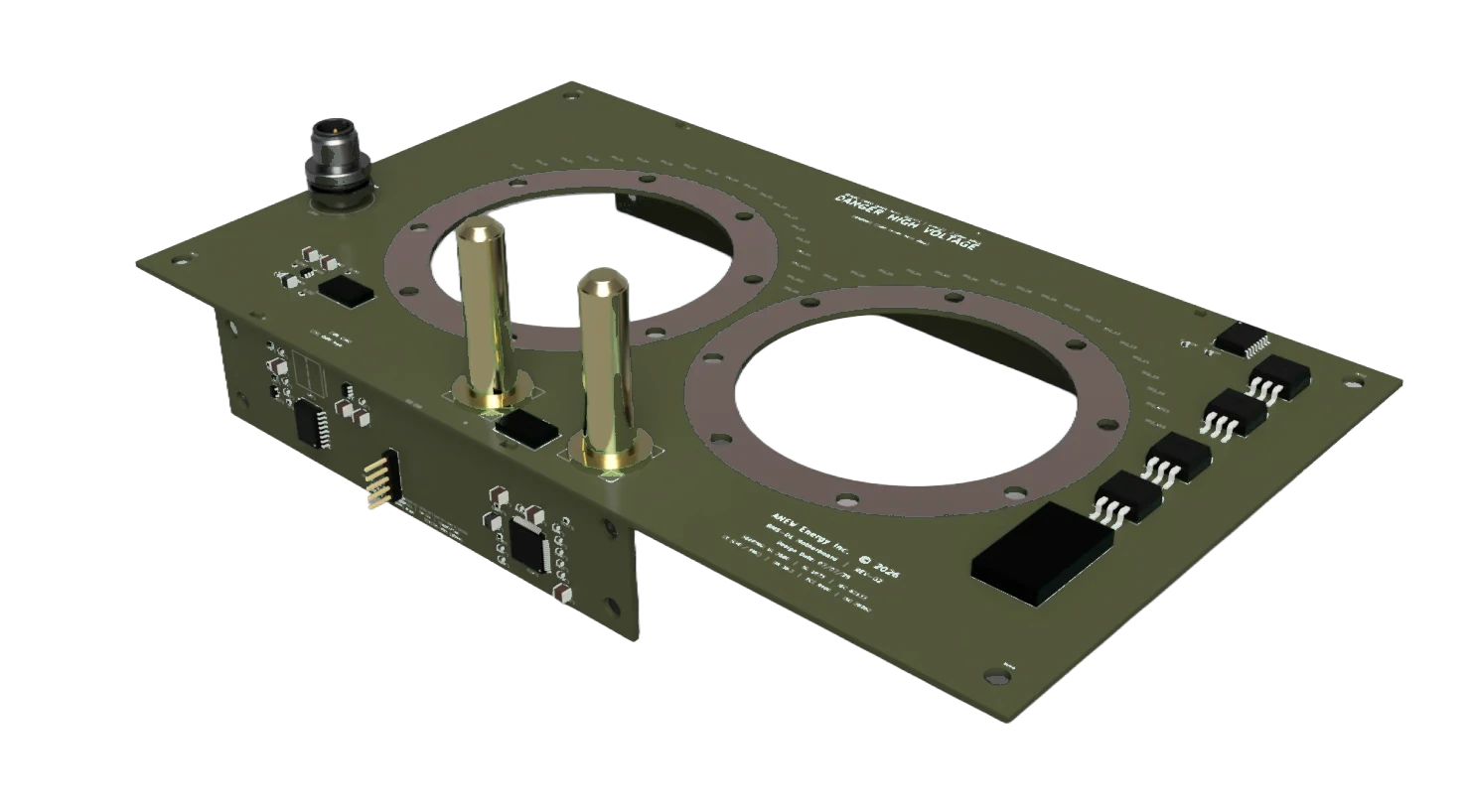
Tap the pulsing markers. The battery’s power board measures and signs; the communications board checks and countersigns. A trade only goes through when both Physical Unclonable Functions authenticate.
Lock 1 · the measuring side
The battery power board: it measures every amp and every cell, and carries the second Physical Unclonable Function.
Lock 2 · the communications board
It checks the first signature, adds the time, countersigns with its own Physical Unclonable Function, and sends the record out.
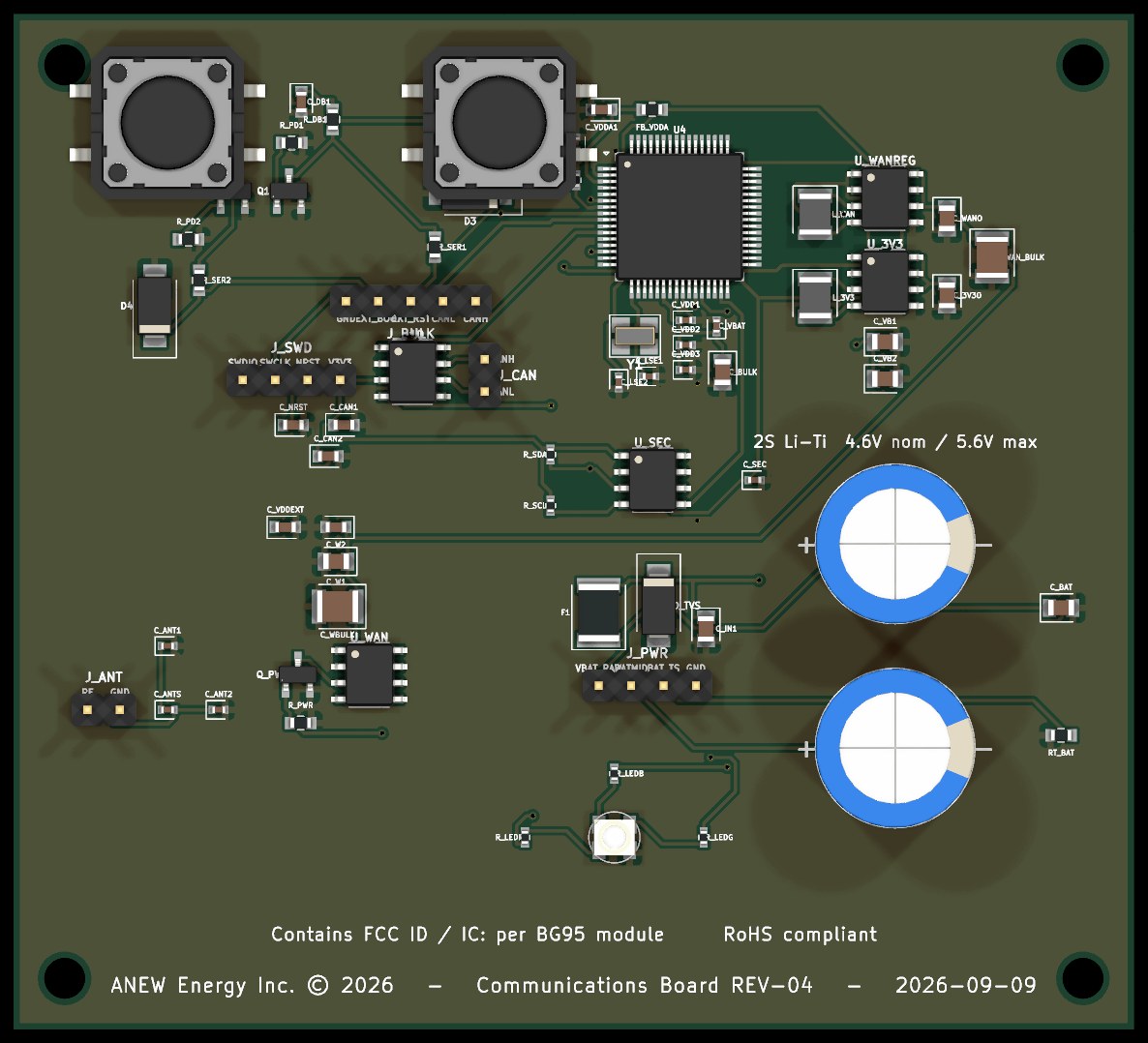
If either Physical Unclonable Function fails to authenticate, the record is refused and no trade is made. Both chips are designed in but not yet fitted: the first boards carry labelled software stand-ins. Board designs are in review; no production boards exist yet.
Try to cheat it
Pick an attack. See which witness stops it.
Choose a way to cheat and a design. Watch the fake record travel from the power device, through the communications, to the cloud check — and see whether it is counted as real, tradable power. The outcomes come from our software test rig, including the two attacks the two-witness design does not stop.
Pick an attack
Choose one on the left to send a fake record down the line.
Simulation with software stand-ins for the chips, using the outcomes of our test rig. It counts which kinds of attack are stopped. It is not a promise about any real device and not the chance of being hacked. An independent security review and a penetration test come before we make stronger claims.
Why crypto at all
It is a faster pipe. It is not the reason to trust the project.
Where it can help
- A funder in one country can pay for a project in another without either side needing the other’s bank.
- Where local lenders are scarce, it opens a second door to money for small projects.
- Payments can be tied to something checkable — stage sign-offs and a device-signed record of power made.
Where it does not help
- It does not make a weak project good. The project still has to make power that someone pays for.
- Currency risk remains: the power may be sold in local money while the funder is paid in digital dollars. We have not modelled that yet.
- The rules differ country by country, and in many places a revenue share of this kind may count as a security.
Where it fits
One of six ways to pay for clean power.
Crypto funding is path three of six. It sits beside paying for it yourself, a green-bond note, selling a tax credit, Energy as a Service, and Energy as a Service funded with a partner. Each suits a different place and a different customer.
What has to be true first
Six things we need before real money moves.
A licensed custodian
Someone regulated holds the funds, not ANEW. None is engaged yet.
Funder identity checks
The global anti-money-laundering standard covers stablecoins and the firms that handle them, so funders are identified.
A legal classification
Whether a revenue share counts as a security is decided country by country. Counsel has not yet reviewed this.
Real device identity
The first boards carry a labelled software stand-in. The real identity chips come with the next board version.
A settled currency plan
Local-money revenue against digital-dollar funding needs a plan. It is not modelled yet.
A country-by-country map
Where crypto funding is allowed, and who may take funders’ money, is still to be mapped market by market.
Questions
Plain answers.
Is this a cryptocurrency I can buy?
No. Crypto here is only a way to move money between countries. ANEW is not selling a coin or a token.
Is this an investment offer?
No. This page explains an idea. Nothing here is an offer of securities, financing, tokens or advice. Any real arrangement would be made through licensed parties, with the legal work done first.
Does ANEW hold funders’ money?
No. The design is that a licensed custodian holds it and releases it in stages. No custodian has been engaged yet.
What is a stablecoin?
A digital token meant to hold a steady value, usually one US dollar. It moves like crypto but is priced like cash. Not every stablecoin is equally safe, which is one reason a regulated custodian matters.
Can crypto traders make money from this?
That is the goal: traders could earn from income shares, power purchase agreements, carbon credits, tax credits and other trades that flow from device-verified power. It is not possible today. The platform is not built, no trades have taken place, we publish no return figures, and dealing in these instruments may need licences.
Where is ANEW with the money side overall?
At concept stage. See the Funding page for the bigger picture and the six ways to fund it for the comparison.
Funder, installer or technology partner?
Tell us where you sit and what you would want to see. We will say honestly what exists today and what does not.
Explanation only. Not an offer of securities, financing, tokens, tax or legal advice. Availability, terms and rules are set per project and per country.
No custody; not a financial intermediary. ANEW Energy does not manage, hold or take custody of anyone’s capital, and is not a bank, broker-dealer, exchange, fund, lender or investment adviser. We make energy assets fundable: data, verification and documentation. Funding decisions, and any movement of money, are between the asset owner and a regulated funder. ANEW does not promote or refer anyone to a bank that is not FDIC-insured or an exchange that is not a SIPC member. FDIC or SIPC coverage is not a guarantee of any return and does not protect against investment losses.