eScout Permitting
ACT FIVE
The install takes a day. The paperwork takes a season.
A crew can set a residential array in a day. Getting the permit, passing the inspections and being allowed to switch on takes months — and how many months depends entirely on which city line your roof falls behind. Nobody tells you that number before you sign. Below, you can look it up.
Automated permitting
Some cities already issue a solar permit in minutes.
SolarAPP+ — Solar Automated Permit Processing Plus — was built by the US Department of Energy's National Renewable Energy Laboratory with the solar industry, and is run today by the non-profit SolarAPP Foundation. A contractor enters the system design, the platform checks it against building, electrical, fire and structural code, and if it passes it issues the permit on the spot. The contractor prints it and books the inspection. It costs the local government nothing to adopt.
It covers residential solar, solar plus storage, storage on its own, main panel upgrades and main breaker derates. It is a United States programme only, and it does not touch the utility side — interconnection is still the utility's process, on the utility's clock.
The effect where it lands is not subtle. In Denver, a jurisdiction on SolarAPP+, the median permit for a sub-10 kW array in 2024 took zero business days. The same city's inspection and interconnection steps still took another twenty-five.
ANEW is not affiliated with SolarAPP+
We reference SolarAPP+ because it is public infrastructure that makes our customers' projects faster, and we point installers toward it. ANEW is not a SolarAPP+ partner, is not integrated with its permitting API, and does not issue permits. Where a jurisdiction runs SolarAPP+, the registered contractor on your job submits through it and your ANEW project manager tracks the result. Whether a specific town is live is the SolarAPP Foundation's to answer — their map is at gosolarapp.org.
The number nobody quotes
How long does it take where you are?
Median business days for 11,690 US authorities having jurisdiction, measured from 938,488 real residential projects between 2017 and 2024. Pick a state, then a city or county.
Start here
Choose a state to begin
Every figure on this panel comes from NREL's SolarTRACE dataset. Times are median business days between the timestamps installers recorded on their own jobs — not estimates, and not promises.
Medians describe what happened to other people's projects in past years. They are not a schedule for yours, and nothing here is a quotation.
Act five, in eScout
A timeline you can see before you sign.
eScout already stacks the whole cost of a site — equipment, labour, ground works, permits, contingency — into one number before you commit. This is the same discipline applied to time. Your remote project manager sequences the electrical, structural, soil, ground-locator, permit and utility inspections, and logs every acceptance. What this data adds is the honest expectation: in your county, that sequence has historically taken this long.
Where a jurisdiction issues instantly, that is days recovered at the front of the schedule. Where it does not, the constraint is visible from the start, in the plan, instead of arriving as a surprise in week nine.
The permit is rarely the long pole
Read a few jurisdictions and a pattern shows up. The permit itself is often fast. What stretches is the utility: the approval to build before anyone can install, and the final interconnection request that stands between a finished array and permission to operate. Statewide in California, sub-10 kW solar took a median of 153 business days from contract signature to switch-on in 2024 — with only one of those days spent waiting on the permit.
Our own town is the ordinary case
ANEW is headquartered in Glenwood Springs, Colorado. It is SolSmart Silver, has no instant permitting, and has too few projects in the sample to have a measured timeline at all. That is not an outlier — most of the 11,690 jurisdictions in this dataset are in exactly that position. Which is the argument for a project manager rather than a lookup table.
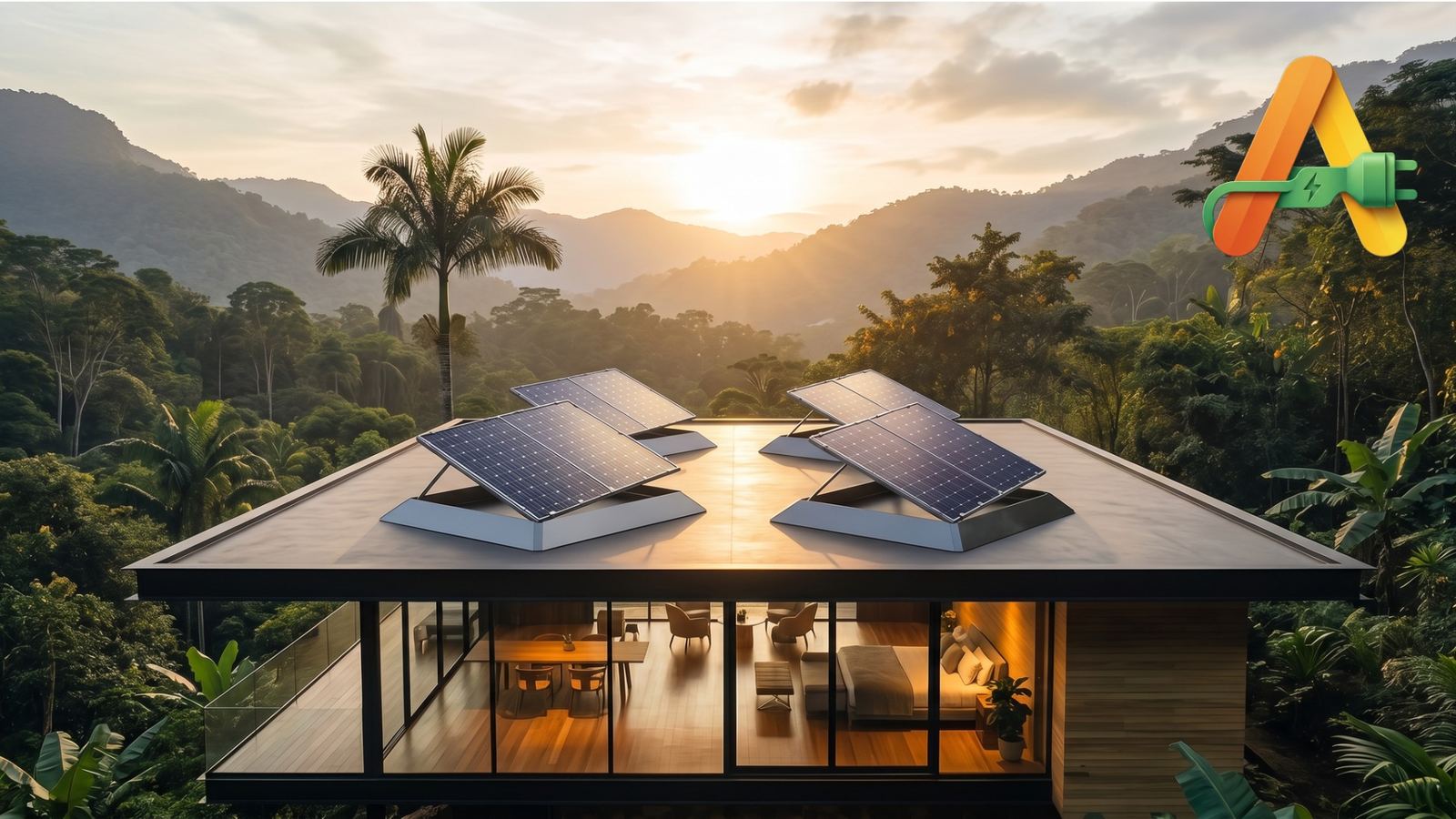
ANEW reference design — architectural rendering generated with Runway.
Where this comes from
Public data, and its real limits.
Every number in the lookup comes from SolarTRACE — NREL's Solar Permitting, Inspection, and Interconnection Cycletimes and Requirements dataset, published under a Creative Commons Attribution licence and built from project-level timestamps contributed by installers. We converted the published workbook into the files this page reads. We did not adjust a single figure.
Attribution
Cruce, J., Dalecki, E., Frey, N., Nissen, K., Botín Garcia-Planas, P., and Cook, J. Solar Permitting, Inspection, and Interconnection Cycletimes and Requirements. National Renewable Energy Laboratory, dataset completed 9 September 2025, last updated 12 March 2026. Licensed CC BY 4.0. Available at data.nrel.gov/submissions/160. NREL's own interactive viewer is at maps.nrel.gov/solarTRACE. NREL and the US Department of Energy do not endorse ANEW Energy, and nothing on this page should be read as an endorsement.
ANEW Energy is not a lender, broker-dealer or investment adviser, and is not a permitting authority. This page is for information only. Permit requirements, fees and timelines are set by the local authority having jurisdiction and the serving utility, and must be confirmed with them.
Demonstration tool
Project not in the dataset? Walk it through anyway.
SolarTRACE covers United States jurisdictions only. ANEW builds in Costa Rica, Kenya and Australia, where different regulators set the rules and no equivalent public dataset exists. Name your location and this walks the sequence your project manager works — with the real measured figures where they exist, and none invented where they do not.
- Identify the permitting authority Which body issues the construction and electrical permit for this address, and what it requires.
- Identify the interconnecting utility Who owns the connection, and whether they require approval before anything is installed.
- Confirm the reviews Structural and electrical review, stamping, and whether any of it is outsourced to a third party.
- Sequence the inspections Ground locate, foundation, rough-in, electrical, structural and final — booked in dependency order.
- Final connection and permission to operate The last request that stands between a finished array and being allowed to switch it on.
This tool does not hold permitting data for anywhere outside the United States, and it will not guess. No regulator, fee or timeline is shown for a location the dataset does not cover.
A demonstration of how ANEW sequences permitting, not regulatory advice. ANEW Energy is not a permitting authority. Requirements, fees and timelines are set by the local authority having jurisdiction and the serving utility, and must be confirmed with them.
Want the timeline for your site?
Tell us where the project is. Your project manager works the real sequence — the AHJ, the utility, the inspections — and reports it back against these medians.