Manufacturing Bifacial Solar
LINE ONE
A 3 GW heterojunction solar factory, built in phases.
Cells and modules under one roof, on the architecture the industry is moving toward rather than the one it is moving away from. This is the full scope of the line: the technology, the two build stages, the work that has to happen before ground is broken, and what each phase delivers.
The plant
Designed for 3 GW. Equipped for 1.2.
Completing a 3 GW factory in a single phase is neither practical nor economical. Retrofitting a building that was only ever sized for 1.2 GW is worse — it means shutting down running lines to widen a bay or upgrade a substation.
So the split runs down a different seam. The factory and the entire installation are built to operate at 3 GW from the start — the shell, the power, the water, the gas, the drainage, the cleanroom services and the material handling. Only the production lines are phased. Phase one houses 1.2 GW of capacity; additional lines are added later into space and services that are already waiting for them, with minimal disruption to what is already running.
Expansion toward the full 3 GW is planned to be funded mainly from the profits of initial sales rather than from a second raise.



The technology
Heterojunction is a different cell, not a better version of the old one.
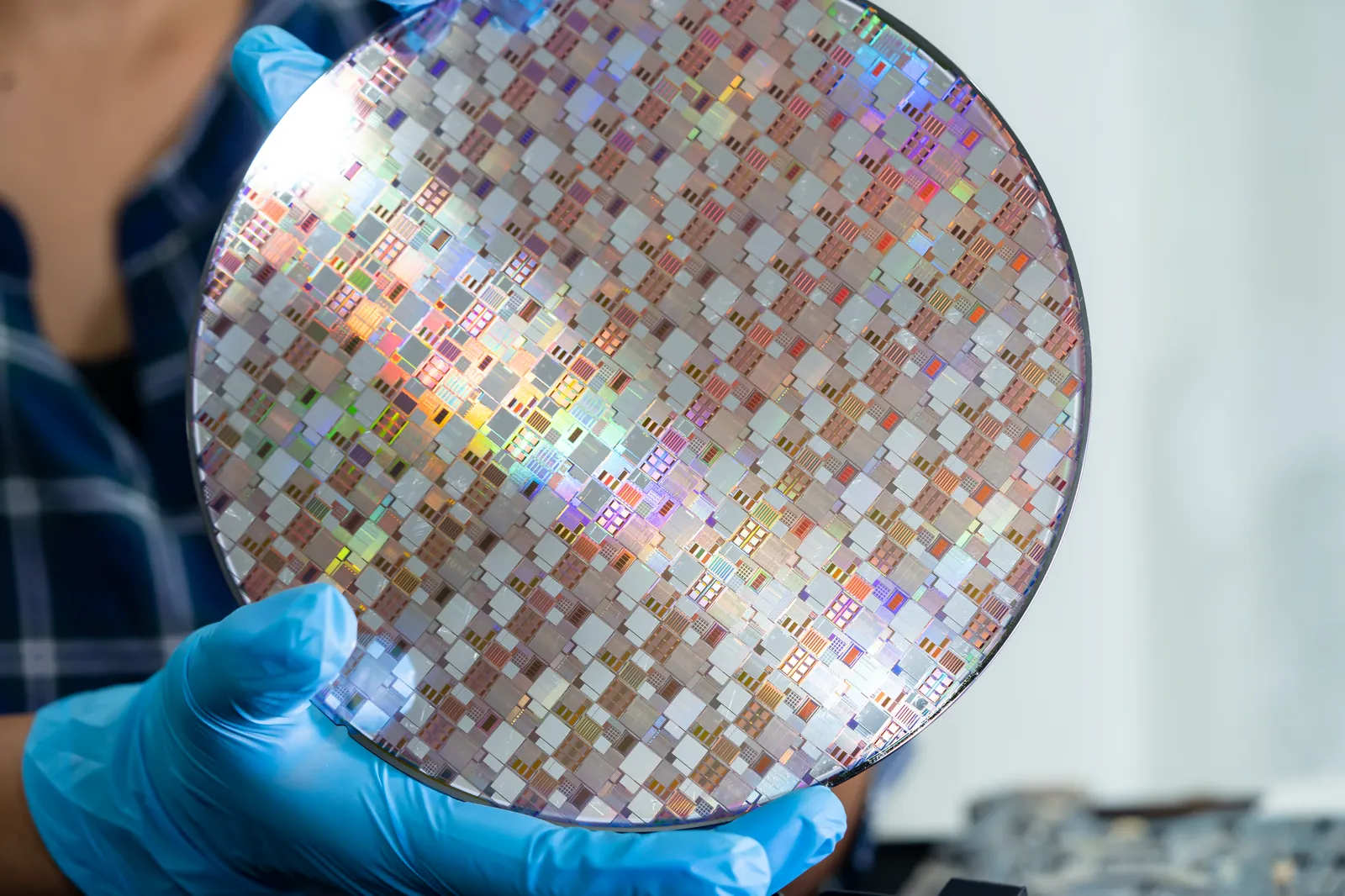
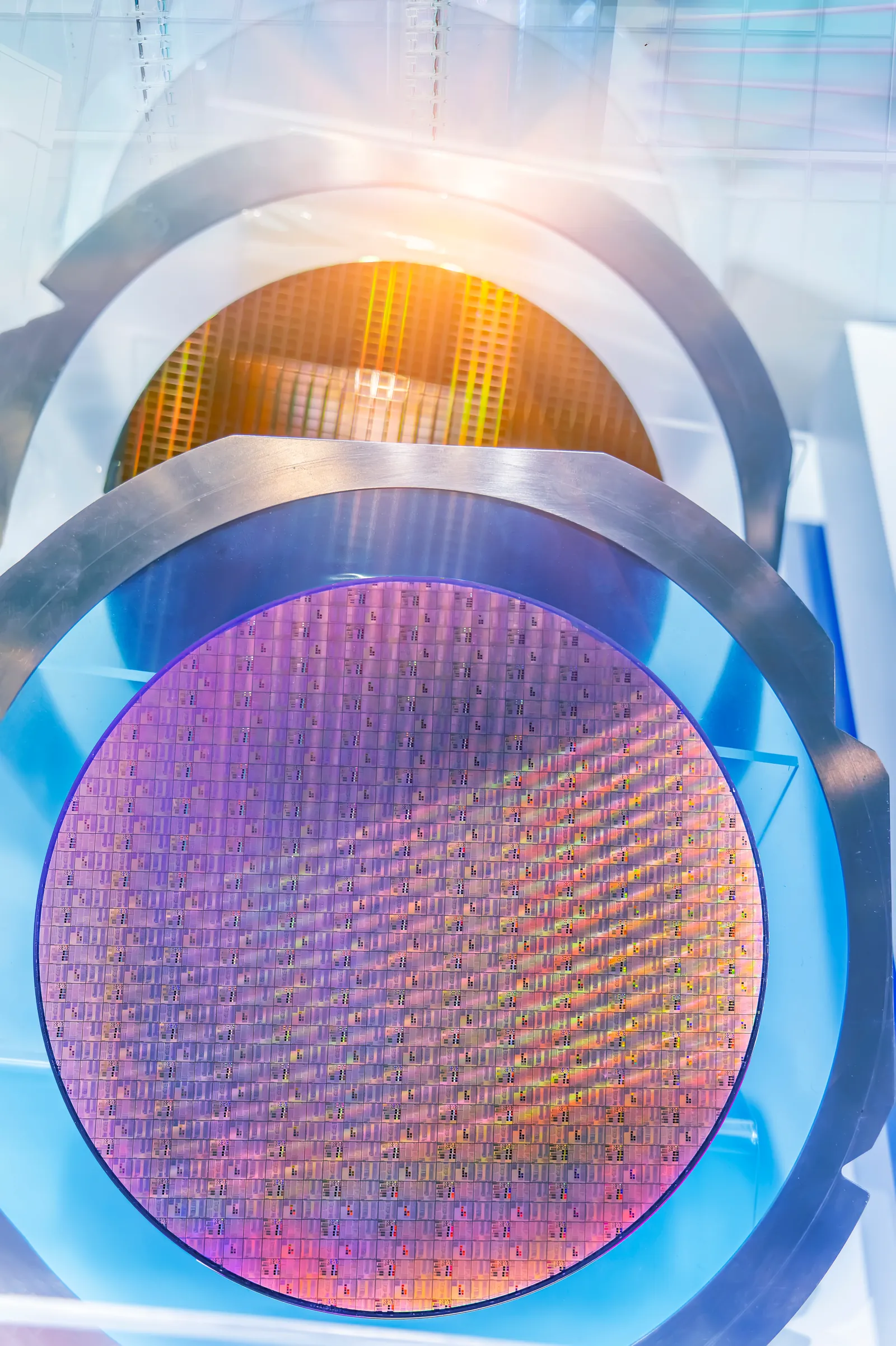
The incumbent technology is PERC, and almost all of the world's installed capacity to make it sits in China. HJT is not an incremental improvement on that cell — it is a differently designed photovoltaic cell that uses alternative materials, requires a completely different manufacturing set-up, and gets to a higher number with fewer steps.
It combines the best qualities of crystalline silicon with those of amorphous silicon thin film to produce a high-power hybrid cell. Conversion efficiency moves from PERC's roughly 15–20% to 22–25% and above, and because the process uses fewer steps than PERC there is room for significant cost reduction once the line is past start-up.
The technology was originally developed by Sanyo Electric in the 1990s — later acquired by Panasonic — and matured from there into the full HJT panel now entering the market.
The temperature coefficient is the part that matters in the tropics. Every panel loses output as it heats up; the coefficient is how fast. HJT's is lower than the alternatives, so over the life of the system an HJT module produces more energy than a module of similar nameplate power.
In a hot climate that gap is not marginal. It is the difference between the yield on the datasheet and the yield actually delivered on a roof in Guanacaste in April, and across a system's life it can be worth thousands of dollars to the customer. It also means HJT is simply the best-performing panel available for the markets ANEW is building for.
And it has somewhere to go. Introducing perovskite materials into the cell structure gives HJT a clear road map toward roughly 30% efficiency — a path PERC does not have.
Cell conversion efficiency
The transition this investment is buying: from PERC, to HJT, to the perovskite road map.
Bars scaled to a 32% axis. PERC and HJT ranges are the cell-technology figures in the project scope. The perovskite figure is a road-map target, not a production specification.
Licensing and IP, stated plainly
Because HJT descends from patented work, building a line involves licensing and IP arrangements as part of the technology transfer. Defining those arrangements — what is licensed, from whom, on what terms and at what cost — is explicitly part of the feasibility scope, not something already settled. ANEW states no licensing agreement it has not signed.
Everything on this page is pre-feasibility planning: design targets, planning parameters and scopes of work.

The market
Under 2% of the market today — which is the opportunity.
The solar market is not slowing down. Global PV demand is forecast to pass 3 terawatts worldwide by 2030, and the latest analysis reads as a market getting ready for serious growth rather than one levelling off.
HJT currently forms a relatively small share of that market — under 2% — and is nonetheless regarded as the greatest available opportunity for technological innovation and increased cell efficiency. The reason both things are true at once is the switching cost facing everyone already in the business.
Retooling is not an option
Chinese manufacturers dominate global supply with PERC. Upgrading a PERC facility to HJT is very costly and requires the replacement of entire production lines — not a retrofit. An incumbent's installed base is a liability here, not an advantage.
The cost advantage has eroded
Established producers' operating expenses have risen with energy and labour, cutting their competitiveness at utility scale. Shipping costs have eaten into the delivered price, and a growing share of buyers actively prefers to avoid Chinese-manufactured product.
Price parity is already here
HJT cells can now be made at prices similar to older, less efficient technologies. Once the price gap closes, the efficiency and temperature advantages stop being a premium feature and start being the obvious choice.
What that means for a new entrant
A greenfield plant has no PERC lines to write off. Building on HJT from day one means starting at the efficiency the market is moving toward, at a capital cost comparable to building the technology it is moving away from — and with a road map to 30% rather than a ceiling. That is the whole strategic case for putting the first and largest line in the copy factory on heterojunction.


Project scope
Two stages, 1.2 GW each.
Fully automated module line, 1.2 GW
Select and plan a fully automatic module line using M10 wafers and the latest multiwire technology, with the layout designed for the highest efficiency and the line configured to the customer requirement.
- Configuration — glass/glass or glass/backsheet, accommodating full-cell or half-cell modules.
- Layout — line arrangement, technology selection and material flow.
- Manpower — the staffing the line requires shift by shift.
- Capex — equipment requirements costed for the stage.
- Storage — factory layout for stocking complete panels and work in progress.
- Qualification — selection and qualification of all equipment.
HJT cell line, 1.2 GW
The harder half, and the one that carries the technology. This stage requires a transfer of the HJT process into the plant, not just the purchase of tools that can run it.
- Technology transfer — the HJT process brought into the plant with its licensing and IP terms defined.
- Deposition tools — selection of the highest-quality PECVD and PVD equipment and its ancillaries for HJT cell manufacture.
- Production flow — layout and planning for the most efficient path between steps.
- Automation — capex and specification for the automation around the process equipment.
- People — helping select and train process engineers capable of running the line at a high level.
Wafer in, module out
Wafer receipt & texturing
M10 silicon wafers cleaned and surface-textured to trap incoming light.
Amorphous silicon (PECVD)
Thin passivating films deposited on both faces — the step that makes the junction a heterojunction.
Transparent conductive oxide (PVD)
Sputtered TCO layers carry current across the cell without blocking light.
Metallisation
Low-temperature screen printing lays the contact grid that HJT's thin films require.
Cell test & sort
Every cell flash-tested and binned, so modules are built from matched cells.
Multiwire stringing
Fine multiwire interconnection cuts shading loss and silver consumption.
Layup & lamination
Strings laid between encapsulant and glass, laminated into a sealed bifacial stack.
Framing & junction box
Frame, seal and junction box fitted — the interface between module and array.
Flash test & pack
Final power measurement, class sort, labelling and palletising for despatch.



The work plan
What has to be settled before ground is broken.
A project of this size does not begin with construction. It begins with a feasibility study that turns a concept into an exact project plan — and until that study is done, every number on this page is a planning parameter rather than a commitment. This is what it resolves.
The site
How large the site must be to accommodate every stage plus all the utilities, defined precisely enough that the construction and engineering needed to prepare it can be scoped and priced. The utility portion is defined alongside it, so the whole area — factory, utilities, storage, support — is a known quantity.
AlsoA specific list of required certifications, so none is assumed to be in place
Equipment
Every tool for every stage of the project, with recommended vendors chosen for their fitness as long-term partners — including vendors capable of working with perovskite materials for the road map ahead. From that list, an equipment cost can be estimated.
NoteInitial quotations typically fall on negotiation once real orders are ready to place
Technology
Full definition of the HJT process to be run: process steps, cell design and expected cell efficiencies, with the full production equipment qualified alongside the test and quality-control equipment required to hold those numbers in volume.
PlusThe technology-transfer plan, with licensing and IP procedures and costs
Staff
Line headcount for a gigawatt-scale operation is only part of the answer. A full operations team — planning, purchasing, logistics — is set out as an organisational plan, so the gaps against current staffing are visible and recruiting can start on the critical path rather than behind it.
Timing
An overall timeline presented stage by stage, with the items and actions on the critical path clearly identified — so time to market is a known figure and commercial decisions can be based on it.
OutputA total project timeline from financial closure to completion
Costs
A full cost schedule in enough detail to define precisely what additional investment is required from project partners, broken into the usual categories — capex, opex — showing upfront and ongoing costs separately.
OutputInvestment and cashflow forecast for the 1 GW line
Recycling
Requirements for a recycling operation, the specific installations it needs and the general procedures for running it sensibly — scoped into the plant from the beginning rather than added once the first modules reach end of life.
How to move ahead
A detailed plan for the optimum way forward, and specifically the actions needed and the decisions that must be taken in the next six months — the part that turns a study into a project.
Delivered asA written report and a face-to-face presentation
Specific deliverables
- Site drawing — an outline of the site with all parts identified, and layout proposals for the module and cell lines, following a site visit and survey.
- Equipment list — production and utility equipment with estimated costs for purchase, installation and ramp-up.
- Workforce plan — a full list of requirements by role, responsibility and skills required.
- Total project cost — stage by stage, with a full breakdown of capex and opex forecasts, plus investment and cashflow forecasts.
- Project timeline — a total timeline chart from financial closure to completion.


The schedule
Twenty-one months to first production.
Indicative solar build-out
Months from project start. Overlapping phases are what keep the critical path at 21 months rather than the sum of its parts.
The 21-month total to first production is the planning parameter in the project scope. The internal phase boundaries and overlaps are ANEW's planning assumption and will be replaced by the detailed critical-path schedule the feasibility study produces.
Ownership and financing
Financing structure depends on the chosen vehicle. For the Costa Rica project the routes under consideration are a new public-private partnership via the ANAPP framework, streamlined private initiatives, or the Infrastructure Transparency Initiative (CoST).
Project-level and community financing — how an individual installation gets paid for once the factory is running — is a separate question, covered on the Fund Your Project page.
ANEW Energy is not a lender, broker-dealer or investment adviser. This page is for information only and is not an offer to sell, or a solicitation to buy, any security.
Working in solar manufacturing?
Equipment vendors, HJT process engineers, EPC contractors and host governments — we would like to hear from you.